

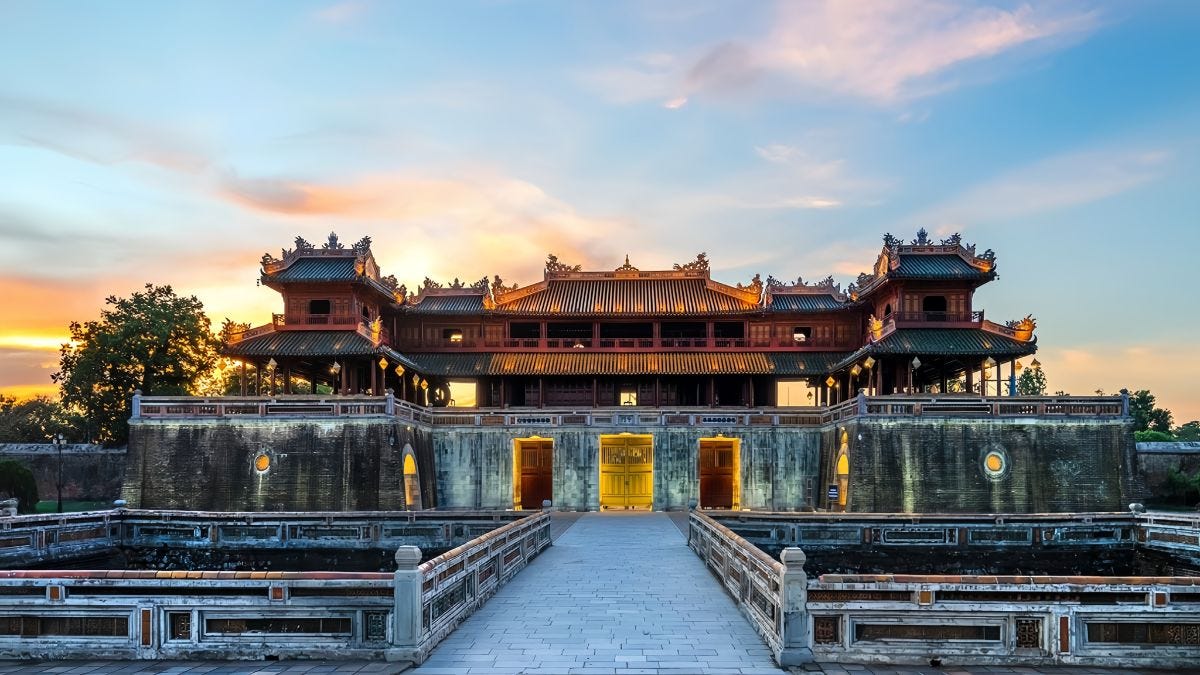
For years, Hue was known as a heritage destination: visit the Imperial City, eat bun bo Hue, take a boat on the Perfume River, and leave.
That model may be changing.
Hue is increasingly developing a broader tourism ecosystem built around heritage, nature, food, wellness, community tourism and sustainable experiences.
And for businesses, that creates an interesting opportunity.
The opportunity is not just more tourists
Hue welcomed more than 3.3 million visitors in the first half of 2025, up 71% year-on-year. Tourism revenue reached more than VND 6.37 trillion, up 59.2%, while international visitors exceeded 1.1 million.
But visitor numbers are only part of the story.
Hue has historically faced a familiar tourism challenge: relatively short stays. Nhan Dan reported an average stay of around 1.8 days.
The bigger commercial opportunity, therefore, may be:
How do you turn a 1 – 2 day visitor into a 3 – 4 day customer?
That means more spending across hotels, restaurants, transportation, wellness, experiences, retail and local products.
Hue already has the ingredients
Beyond the Imperial City, Hue has Tam Giang–Cau Hai Lagoon, Bach Ma, Lang Co, beaches, traditional villages and a strong culinary identity.
This gives businesses multiple tourism segments to work with:
Culture: heritage, architecture, traditional crafts
Nature: lagoons, mountains, beaches
Food: local cuisine and culinary experiences
Wellness: retreats, spas and slow travel
Community: village and ecological tourism
Sustainable travel: low-carbon and locally connected experiences
The opportunity is not necessarily to build another attraction.
It is to connect the attractions into products people are willing to pay for.
What this means for businesses
Hospitality
Hotels can compete through curated local experiences, wellness packages and longer-stay products not just room rates.
F&B
Hue’s food culture can move beyond restaurants into food tours, cooking classes, premium dining and packaged local products.
Wellness
The combination of nature, heritage and a slower pace creates room for retreats, spas and restorative travel.
Tourism services
One of the biggest gaps may be connecting the pieces: transport + accommodation + food + activities + booking.
A tourist does not buy “five attractions.”
They buy “three days in Hue.”
That difference matters commercially.
The Vietnam Operations take
Hue does not necessarily need more tourists.
It needs to capture more value from every tourist who arrives.
The city already has the raw materials: heritage, cuisine, nature and culture. The next challenge is operational turning these assets into experiences that are easier to discover, book and pay for.
For businesses watching Vietnam’s next tourism markets, Hue may be worth looking at not as a sightseeing destination, but as an emerging tourism ecosystem.
Planning to enter Vietnam’s tourism market?
Book a consultation with Vietnam Operations to explore the market, identify opportunities and understand what it takes to operate locally.