


A Workforce That No Longer Equates Loyalty With Stability
“I’m not afraid of quitting. I’m afraid of staying somewhere I can no longer grow.”
That sentiment increasingly reflects how many Gen Z professionals approach work today. Over the past several years, job-hopping has evolved from being viewed as a warning sign into a normalized career strategy among workers born between 1997 and 2012.
Unlike previous generations that often prioritized long-term employment stability and company loyalty, Gen Z is entering the workforce with a significantly different mindset. For many young professionals, work is no longer solely about financial security. It is also expected to provide purpose, flexibility, personal development, and emotional well-being.
As a result, the definition of a “good job” is gradually changing.
More Than Just Salary
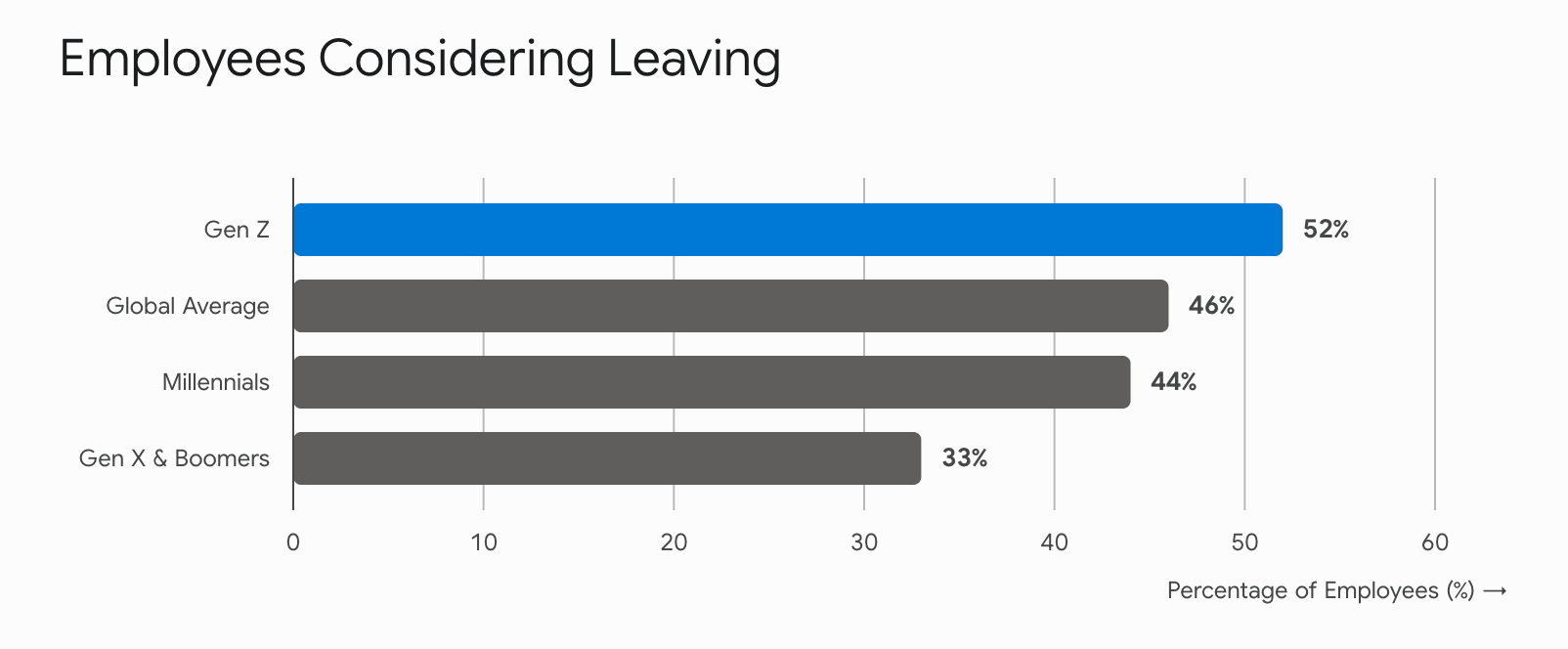
According to Microsoft’s “Work Trend Index 2024,”
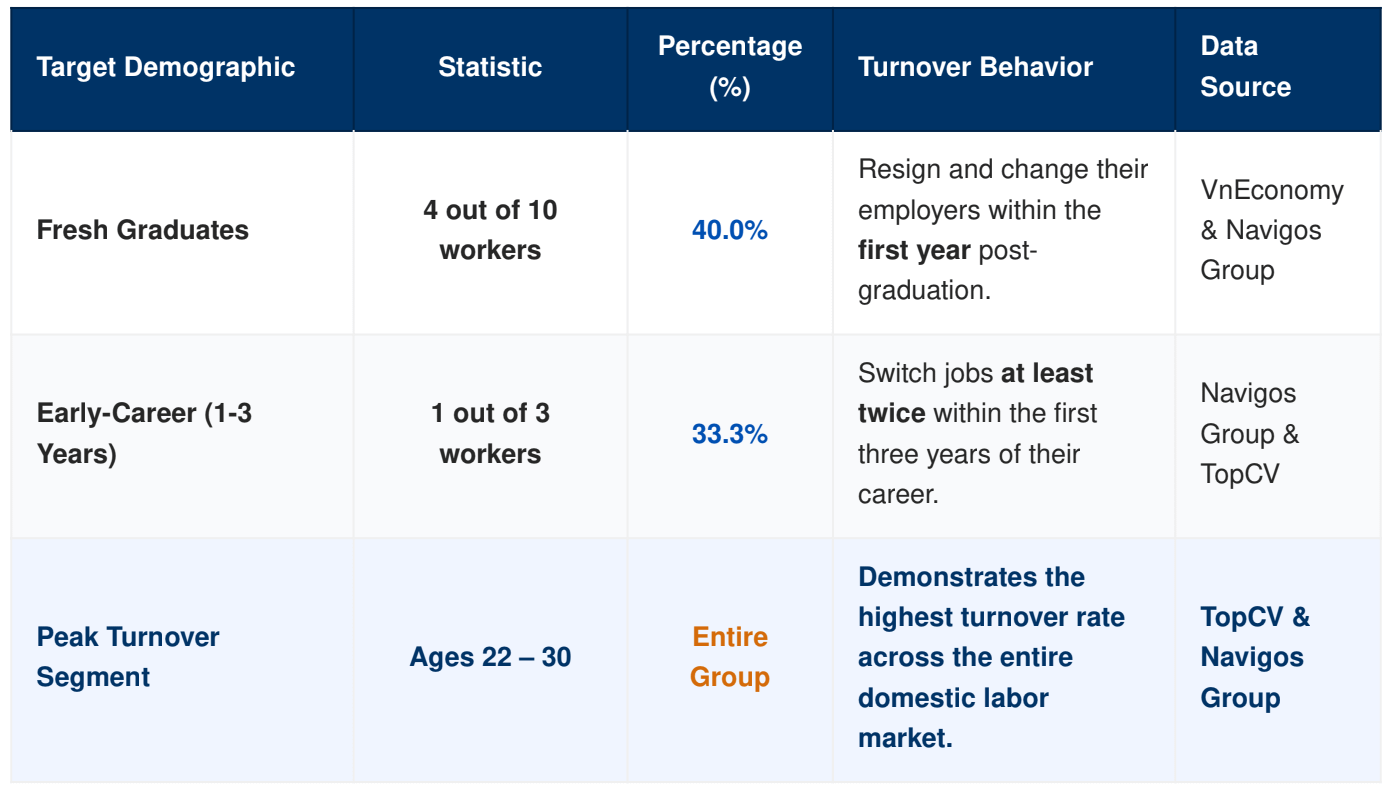
In Vietnam, data cited by VnEconomy and Navigos Group shows that four out of ten young workers change jobs within their first year after graduation. Another survey conducted by TopCV and Navigos Group found that employees between the ages of 22 and 30 currently demonstrate the highest turnover rates in the labor market. Notably, one in three young professionals has changed jobs at least twice within the first three years of their career.
While salary remains an important factor, financial compensation alone is no longer sufficient to retain younger workers.
Many Gen Z employees are increasingly willing to accept lower salaries in exchange for healthier workplace environments, flexible working arrangements, or stronger work-life balance. According to VOV, the growing job-hopping trend reflects broader changes in how younger generations define career satisfaction and overall quality of life.
For many young professionals interviewed by VnEconomy, decisions to leave often stem from feeling professionally stagnant, lacking career advancement opportunities, or experiencing mental health pressures in the workplace.
This generation also tends to expect faster recognition and clearer development pathways. Many seek opportunities to explore different roles, develop diverse skill sets, and achieve visible progress early in their careers.
Career Advancement Or Growing Instability?
From one perspective, frequent job changes may provide young professionals with broader exposure and accelerated learning opportunities.
Many Gen Z employees view each career transition as an opportunity to “level up” professionally. Exposure to different industries, management styles, and corporate cultures can help younger workers become more adaptable within an increasingly competitive labor market.
Experts quoted by VnEconomy noted that Gen Z employees are significantly more likely to leave organizations where they feel undervalued, emotionally exhausted, or unable to grow professionally.
However, the normalization of job-hopping also raises concerns among employers and recruitment professionals.
Many companies continue to view resumes containing multiple short-term positions cautiously, often associating them with instability, lack of commitment, or unclear career direction. Recruiters interviewed by VOV suggested that excessive job transitions may sometimes indicate impatience or insufficient long-term planning.
Frequent workplace changes may additionally make it more difficult for employees to develop specialized expertise or establish long-term professional relationships within organizations.
Some HR specialists further argue that while Gen Z workers are highly adaptable and ambitious, they may also struggle with persistence when facing long-term challenges or slower career progression.
Companies Are Being Forced To Rethink Retention
The rise of Gen Z job-hopping is also pushing companies to fundamentally reconsider how they attract and retain talent.
If competitive salaries were once considered the primary tool for employee retention, businesses today increasingly need to invest in workplace culture, learning opportunities, mental health support, and flexible working environments.
According to VnEconomy, many companies in Vietnam are redesigning workplaces to become more employee-centered by implementing hybrid work models, wellness-focused office spaces, stronger internal community activities, and policies that better support work-life balance.
HR specialists also emphasize that retaining Gen Z employees is no longer simply about persuading workers to stay longer. Companies are now expected to create environments that provide employees with a sense of purpose, personal growth, and long-term alignment.
By 2025, Gen Z is projected to account for nearly one-third of Vietnam’s workforce, meaning the generation’s expectations and working styles will continue reshaping labor market dynamics in the years ahead.
Redefining What Stability Means
For older generations, career stability was often associated with remaining at one company for many years. For Gen Z, however, stability is increasingly being defined through continuous self-development and maintaining a sustainable quality of life.
As a result, job-hopping is not necessarily viewed by younger workers as a sign of disloyalty or recklessness. Instead, many see career transitions as necessary steps toward finding work environments that align with their personal and professional goals.
In an economy shaped by rapid technological change, evolving workplace expectations, and increasing competition, Gen Z may not become the most loyal generation to employers.
However, they may become the generation that most clearly understands that a successful career should offer more than financial security alone. It should also provide growth, meaning, flexibility, and a reason to continue showing up every day.
This article was originally published on Vietnam Operations:
https://vietnam-operations.com/gen-z-and-the-rise-of-job-hopping-career-growth-or-a-crisis-of-commitment/