

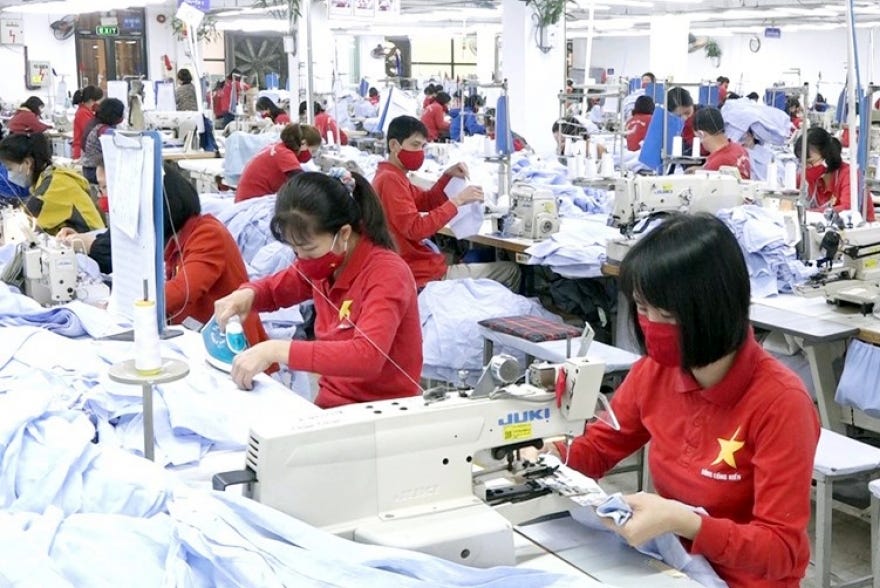
For decades, cheap labor was one of Vietnam’s biggest competitive advantages.
It helped attract global manufacturers in textiles, footwear, furniture, and electronics, transforming the country into one of Asia’s fastest-growing manufacturing hubs.
But that advantage is fading.
Today, foreign investors are asking a different question: not “Is labor in Vietnam cheap?” but “Can Vietnam provide the skilled workforce we need?” As one industry expert told Dân trí, investors should focus less on labor costs and more on workforce capability.
Cheap Labor Is No Longer Enough
As Vietnam’s economy has grown, wages have steadily increased alongside living standards. Meanwhile, manufacturers are investing more in automation, digital technologies, and higher-value production, making productivity far more important than labor costs.
This shift has been anticipated for years. Labor experts have warned that Vietnam cannot rely on inexpensive labor forever if it wants to move up the global value chain.
Investors Are Looking for Skills, Not Savings
Modern manufacturers are increasingly evaluating countries based on labor quality rather than labor cost.
Companies are willing to pay higher wages if workers can operate automated production lines, maintain quality standards, and adapt to advanced manufacturing technologies.
As Vietnam attracts more investment in electronics, semiconductors, and precision engineering, demand for skilled workers continues to rise while shortages in technical talent become more apparent.
A New Competitive Advantage
Rising wages should not be viewed as a sign that Vietnam is losing its appeal.
Instead, they reflect the country’s transition toward a more mature economy one that competes through skills, productivity, industrial capability, and higher-value manufacturing, rather than simply offering the lowest labor costs.
For foreign investors, the question is no longer how cheap Vietnam’s workforce is, but whether it can support long-term, high-value operations.
If Vietnam can continue improving education, vocational training, and workforce productivity, the end of the “cheap labor” era may become one of its greatest strengths.