

For years, one of the biggest complaints about Vietnam’s real estate market wasn’t the price of land.
It was who determined the price and why identical pieces of land could carry completely different values depending on the transaction.
Now, that may be about to change.
The Communist Party of Vietnam has adopted Resolution No. 21-NQ/TW, setting the direction for amending the Land Law and related legislation. Among all the proposed reforms, one message stands out:
The State will regulate, control, and ultimately decide land prices.
This isn’t simply another legal amendment.
It represents a significant shift in how Vietnam intends to manage one of its most valuable economic assets.
The End of “Multiple Land Prices”?
One of the longstanding issues in Vietnam has been the coexistence of several different “land prices” for the same parcel:
market transaction prices
provincial land price tables
compensation prices
prices used for tax purposes
prices used for investment projects
This fragmentation has created uncertainty for businesses, investors, local governments, and even homeowners.
According to the Party’s newly issued Resolution 21, Vietnam will move toward a system where the State has the authority to regulate, control and decide land prices, while ensuring that prices reflect market principles and removing the “multiple price” mechanism that has existed for years.
This Doesn’t Mean Vietnam Is Returning to Administrative Pricing
At first glance, some international observers might assume the government is moving away from market-based pricing.
The opposite appears to be true.
Resolution 21 emphasizes that land prices should follow market principles, but the State will become the final authority responsible for regulation and decision-making, instead of allowing fragmented pricing mechanisms across different purposes.
The objective is to:
improve transparency
reduce speculation
prevent price manipulation
create a more consistent pricing framework
strengthen public confidence in compensation and land acquisition
This reflects a governance approach where the market provides information, but the State remains responsible for maintaining stability and fairness.
Capturing More of the Value Created by Public Investment
Another major change receives less attention but may have an even larger economic impact.
Resolution 21 states that Vietnam should establish mechanisms allowing the State to reasonably capture part of the additional land value generated by planning changes, infrastructure investment, or changes in land use.
In other words:
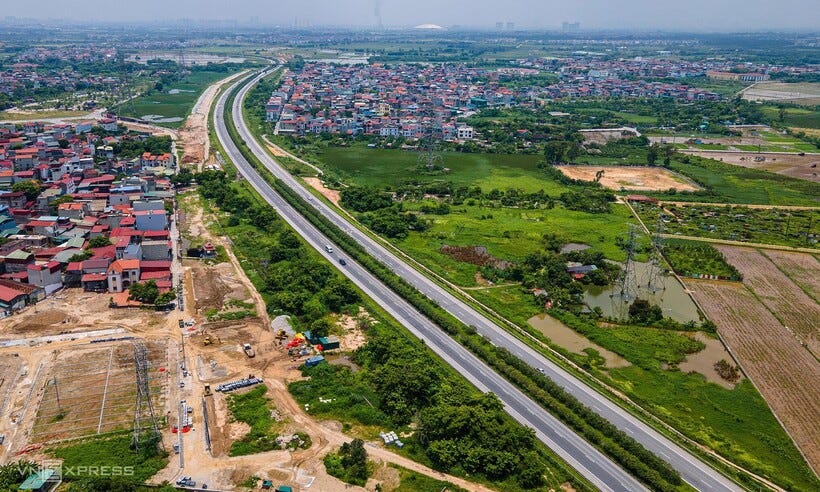
When public investment such as a new metro line, highway, airport, or industrial park increases surrounding land values, a larger share of that appreciation should return to society rather than becoming private windfall gains.
This concept, often referred to internationally as land value capture, has been used in countries such as Singapore, Japan, South Korea and parts of Europe to finance infrastructure while limiting speculative gains.
Why Foreign Investors Should Care
For foreign businesses, land is often the largest single investment when entering Vietnam.
Whether building:
factories
logistics hubs
industrial parks
commercial developments
mixed-use projects
predictability matters as much as price.
If implemented effectively, a more unified pricing framework could reduce:
valuation disputes
compensation uncertainty
project delays
negotiation complexity with local authorities
It may also improve confidence in large-scale infrastructure and industrial development by making land acquisition more transparent.
Of course, implementation will be the real test.
Vietnam has announced many ambitious reforms over the past decade, but execution has often varied between provinces.
Businesses will be watching closely to see how the amended Land Law translates these principles into practice.
The Bigger Picture
This reform isn’t just about real estate.
It’s about how Vietnam governs economic growth.
As the country moves toward becoming an upper-middle-income economy, land is no longer viewed merely as an administrative resource.
Instead, it is increasingly treated as a strategic national capital that must balance investment, development, social equity, fiscal sustainability, and long-term competitiveness.
If Resolution 21 ultimately leads to a more transparent and consistent land pricing system, it could become one of Vietnam’s most consequential economic reforms in years.
For investors, developers and manufacturers, the question is no longer simply “How much does the land cost?”
It is becoming:
“How will Vietnam decide what land is worth?”