

Vietnam has set a major workforce target: at least 10 million workers will receive training, retraining or updated skills in basic AI use by 2030.
The target comes under Vietnam’s national AI human-resource development program, approved in August 2026.
The policy is also summarized in detail by Luật Việt Nam and VietnamPlus.
But the bigger story is not the number.
It is the shift in what Vietnam considers a basic workplace skill.
AI is moving from a specialist technology to something that ordinary employees are expected to understand and use.
1. 10 Million Workers Does Not Mean 10 Million AI Engineers
Vietnam’s target covers basic AI capabilities, including:
using AI tools;
analyzing data;
automating processes;
working with machines;
protecting data;
adapting to changes in jobs.
The program also aims to develop higher-level AI talent, including specialists, engineers and researchers.
VietnamNet’s coverage of the AI workforce program
This creates a three-layer workforce:
AI literacy → Applied AI skills → AI expertise
For most businesses, the first layer may ultimately have the biggest impact.
A salesperson does not need to become an AI engineer to use AI for customer research.
An HR employee can use AI to support recruitment and reporting.
A factory technician can work with automated systems and production data.
The objective is not to turn every worker into a technology specialist.
It is to make workers more capable of working alongside technology.
2. The Bigger Change: Jobs May Be Redesigned
For employers, the key question should not be:
“How many AI specialists should we hire?”
It should be:
“Which parts of our existing jobs can AI improve?”
Consider three types of roles.
AI-assisted
AI supports existing work:
marketing;
sales;
HR;
accounting;
administration.
AI-integrated
AI becomes part of the workflow:
forecasting;
supply chain;
quality control;
production planning;
data analysis.
AI-specialist
The company needs dedicated technical expertise:
AI engineers;
data scientists;
machine-learning specialists.
Most companies will probably need many more people in the first two categories than in the third.
That is why broad AI literacy could become more important than simply recruiting a small number of AI experts.
3. Why This Matters for Manufacturing
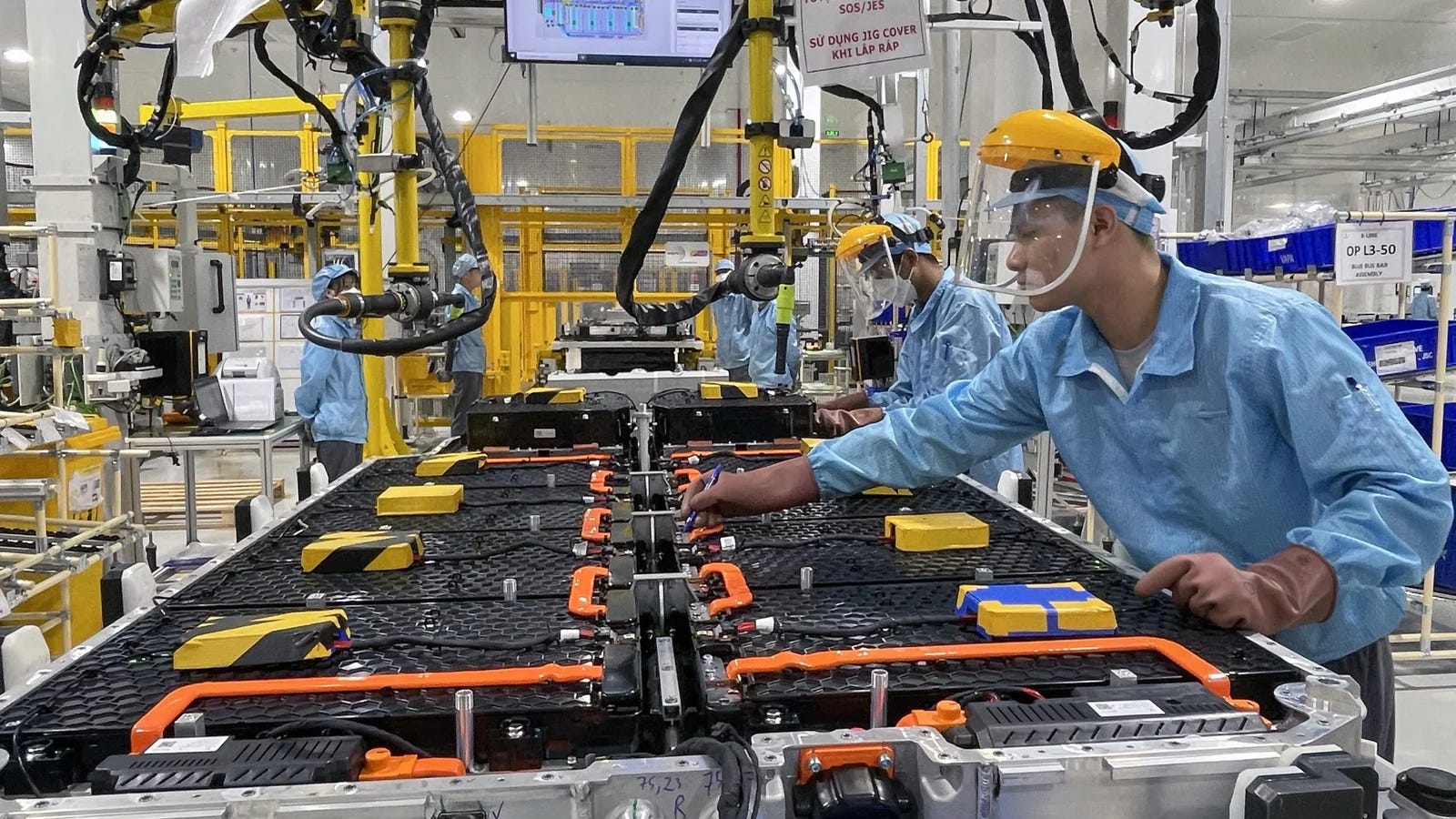
The impact could be particularly significant for Vietnam’s manufacturing sector.
AI can support relatively practical operations such as:
predictive maintenance;
quality control;
production planning;
inventory management;
defect analysis;
automated reporting.
The technology itself is only one part of the equation.
Workers need to understand how to use the tools, check their outputs and integrate them into existing processes.
For an FDI manufacturer, this could eventually mean that workforce capability becomes part of the factory-location decision.
But location is only one part of the equation. Businesses also need to plan carefully for setting up and operating a factory in Vietnam.
4. AI Literacy Also Creates a Governance Problem
Teaching employees how to use AI is only half the job.
Companies also need to decide:
What information can employees put into AI?
Which tools are approved?
Which outputs require human review?
Who is responsible when AI gets something wrong?
How should confidential and customer data be protected?
Vietnam’s AI workforce program specifically includes responsible AI use and data protection among the skills and capabilities that need to be developed.
In other words:
AI literacy needs to come with AI governance.
A workforce that can use AI quickly but handles company data carelessly can create new risks rather than new productivity.
5. Reskilling Could Become a Competitive Advantage
Vietnam’s program also emphasizes reskilling workers affected by automation and technological change.
For companies, this creates an alternative to simply replacing employees.
Consider an experienced factory employee.
They may understand the production process better than anyone else, but lack the digital skills to work with new systems.
Training that employee to use AI can preserve their domain knowledge while improving productivity.
This makes reskilling more than an HR initiative.
It can become a retention and productivity strategy.
6. What Should Businesses Do Now?
Companies do not need to wait until 2030.
1. Audit current skills
Identify:
where employees already use AI;
which roles could benefit;
which jobs are most exposed to automation;
which skills are missing.
2. Create an internal AI policy
Define approved tools, data restrictions and human-review requirements.
3. Train by function
Instead of generic AI training, focus on:
AI for HR.
AI for Sales.
AI for Finance.
AI for Manufacturing.
AI for Supply Chain.
The closer training is to the actual workflow, the easier it is to measure its value.
4. Measure productivity
Track:
time saved;
error reduction;
output per employee;
adoption rates;
cost savings.
AI should ultimately be measured as an operational investment, not simply a technology trend.
7. What This Means for Foreign Investors
For foreign companies entering Vietnam, traditional location decisions have focused on:
labor costs;
infrastructure;
logistics;
industrial parks;
supply chains;
investment incentives.
Workforce AI capability could become another factor.
This matters especially for manufacturers moving from low-cost production toward higher-value operations.
The competitive equation is gradually becoming:
People + Process + Data + Technology
Vietnam’s 2030 AI workforce target suggests the country is trying to strengthen the “people” component of that equation.
Vietnam Operations Take
The target of training 10 million workers in basic AI skills by 2030 is not simply an education story.
It is a signal that AI literacy is becoming part of Vietnam’s workforce infrastructure.
For businesses, the opportunity is not necessarily to replace people with AI.
It may be to build a workforce that can work better with AI.
For foreign investors, especially manufacturers, this should increasingly be considered alongside location, labor, infrastructure and supply-chain planning.
The question for businesses entering Vietnam is no longer only:
“How many people can we hire?”
It is also:
“How capable will our workforce be when technology changes the way work gets done?”
Planning to enter or expand in Vietnam?
👉 Talk to Vietnam Operations to discuss your Vietnam setup and operating plan.