

For years, northern Vietnam has quietly become one of Asia’s fastest growing manufacturing regions.
Samsung, LG, Foxconn, Pegatron, Goertek, Luxshare and hundreds of supporting suppliers have transformed Bac Ninh, Hai Phong, Hai Duong and Quang Ninh into an export powerhouse.
But one challenge has remained consistent:
The port infrastructure has struggled to keep pace with manufacturing growth.
That may now be changing.
A Nearly VND25 Trillion Bet on Vietnam’s Next Growth Phase
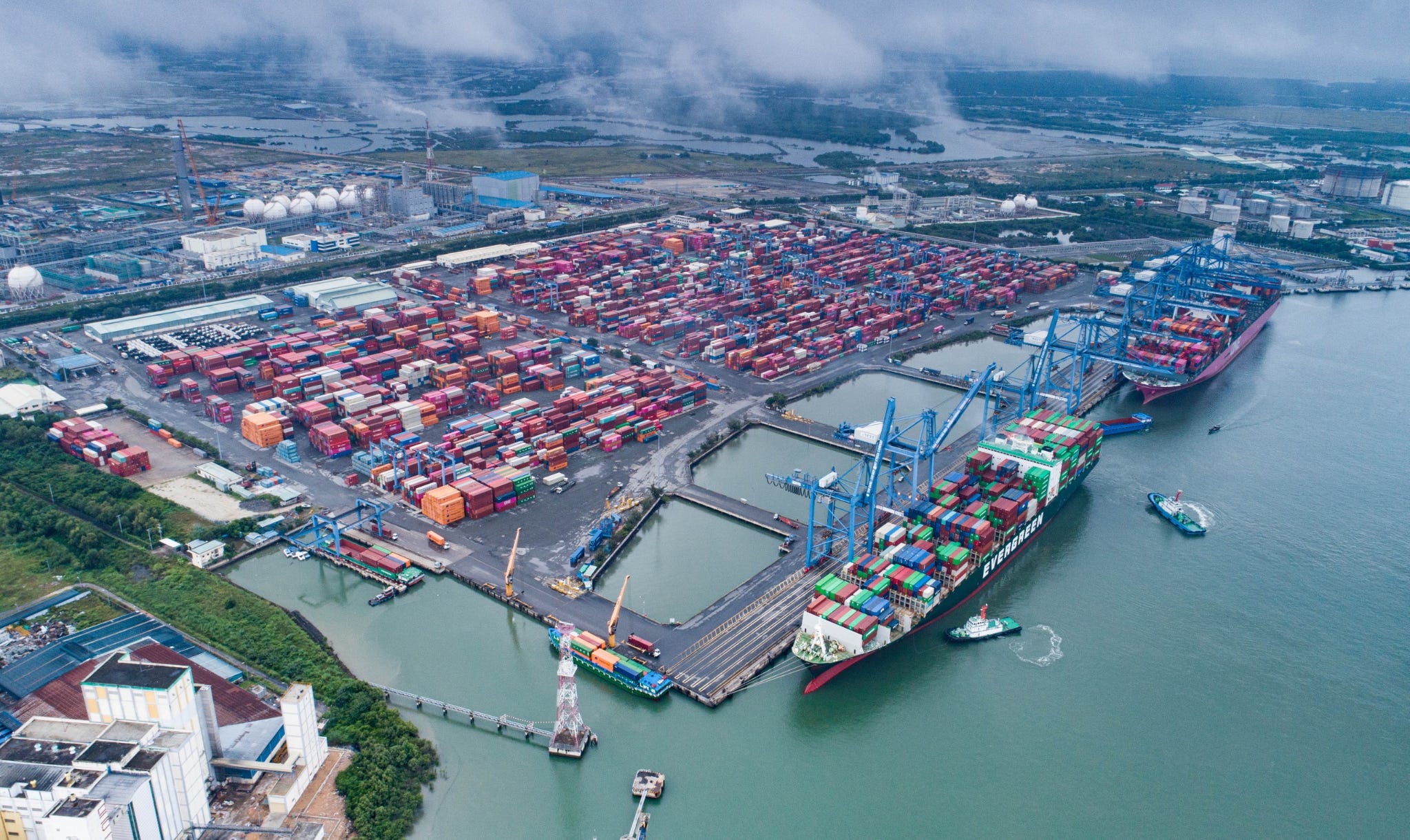
Lach Huyen International Logistics & Industrial Park (LHF) and PSA Vietnam part of Singapore’s PSA International, one of the world’s largest port operators have announced a strategic partnership to jointly develop four new deep water container berths at Lach Huyen Port in Hai Phong.
When fully completed, the project is expected to handle 4.5 million TEU annually, making it one of the largest container terminals in northern Vietnam.
According to project information, the first two berths are expected to begin construction at the end of 2026, while the remaining two will be developed in a second phase through 2035.
This Is Bigger Than Just Four New Berths
On the surface, the announcement looks like another infrastructure investment.
In reality, it represents something much larger.
Vietnam is no longer competing simply by offering lower labor costs.
Its next competitive advantage depends on how efficiently goods move from factories to global markets.
Every hour saved at a port reduces logistics costs.
Every additional direct shipping route reduces dependence on regional transshipment hubs.
Every increase in port capacity gives manufacturers greater confidence to expand production in Vietnam.
As manufacturing scales up, logistics becomes a competitive advantage not just supporting infrastructure.
Why PSA’s Participation Matters
PSA International is not simply a financial investor.
It operates some of the world’s busiest container terminals and manages an extensive global network connecting shipping lines, ports and logistics ecosystems.
When an operator like PSA commits long-term capital, it usually signals confidence that cargo volumes will continue growing for decades rather than years.
For multinational manufacturers already operating in northern Vietnam, this reduces concerns about future port congestion while strengthening international connectivity.
Instead of viewing Hai Phong merely as a domestic gateway, global shipping companies increasingly see it as an important regional logistics node.
Supporting Vietnam’s Manufacturing Shift
Northern Vietnam has become one of Southeast Asia’s most important electronics manufacturing clusters.
However, manufacturing growth has consistently placed pressure on logistics infrastructure.
Larger vessels require deeper channels.
Higher export volumes require faster cargo handling.
Increasing trade requires greater terminal capacity.
Without corresponding investments, port bottlenecks eventually become economic bottlenecks.
This project directly addresses that challenge.
Part of a Much Larger National Strategy
The timing is also significant.
Vietnam’s national seaport master plan to 2050 identifies several internationally important gateway ports, with Hai Phong expected to play a central role in northern Vietnam’s import-export network.
The government’s objective extends beyond increasing cargo throughput.
It aims to strengthen Vietnam’s position within regional supply chains by attracting larger vessels, expanding international shipping services and improving logistics efficiency.
The Real Story Isn’t About Ports
The real story is about confidence.
Global manufacturers invest where they believe infrastructure can support future expansion.
Shipping companies build routes where sufficient cargo exists.
Port operators invest where long-term trade growth appears sustainable.
The PSA-LHF partnership reflects all three.
As Vietnam continues moving up the manufacturing value chain, infrastructure investments like Lach Huyen become less about building ports and more about building confidence in Vietnam’s next stage of economic development.
For investors watching Vietnam, this project is another indication that the country’s competitive strategy is evolving.
The conversation is no longer just about labor costs.
It is increasingly about logistics capability, supply chain resilience, and global connectivity.