


Two foreign-invested manufacturers in Northern Vietnam wanted to expand beyond manufacturing.
They wanted to import, wholesale, distribute and trade products in Vietnam mainly supplying third-party manufacturing customers.
The obvious question was:
Could they add trading activities to their existing companies?
The answer was more complicated than expected.
The Challenge
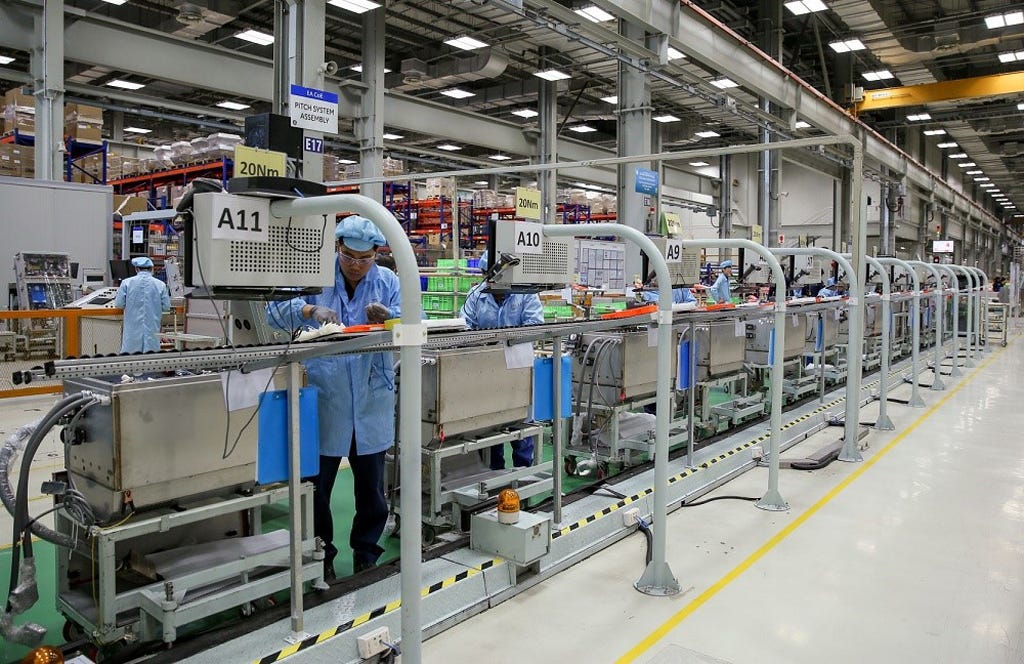
Both companies were already operating legally from an industrial park.
Their preference was simple: keep the existing companies and avoid setting up new entities.
But the industrial park was primarily designed for manufacturing activities. Adding standalone trading activities raised practical licensing questions.
Some companies in the same area had obtained trading approvals in the past. But those approvals could not automatically be treated as precedent.
Regulatory practice had changed.
The project therefore required more than checking whether trading was legally possible.
The real question was:
Would the authorities approve this structure in practice?
The Options
Three approaches were considered.
01 Amend the existing manufacturing project
This was the simplest and potentially lowest-cost option.
But approval prospects were uncertain because the proposed trading activities did not naturally fit the industrial-park manufacturing project.
02 Create a separate investment project under the same company
The existing manufacturing project would remain unchanged.
A new trading project would be registered under the same legal entity, but located outside the industrial park.
This could separate the manufacturing and trading activities from a licensing perspective without creating another company.
03 Set up a new trading company
This offered the clearest separation between manufacturing and trading.
But it also meant:
another legal entity;
additional setup costs;
additional compliance;
more administrative work.
For the client, this was the least attractive option unless the other structures proved unworkable.

The VO Take
Before moving into formal applications, the project team reviewed:
Existing IRC and ERC registrations
Current business activities
Industrial-park documentation
Proposed products and HS codes
Import and distribution model
Customer profile
Proposed project location
Relevant licensing authority
The team also conducted informal, no-name discussions with relevant authorities and stakeholders to understand the current practical licensing position.
This helped compare the options based not only on legal structure, but also on:
Approval probability.
Timeline.
Cost.
Operational practicality.
Long-term compliance.
The Solution
The client ultimately chose the middle ground.
Instead of changing the existing manufacturing projects or creating new companies, each company would establish a separate trading investment project outside the industrial park under its existing legal entity.
The original manufacturing projects could continue unchanged.
The new trading activities would be reflected through separate Investment Registration Certificates (IRCs).
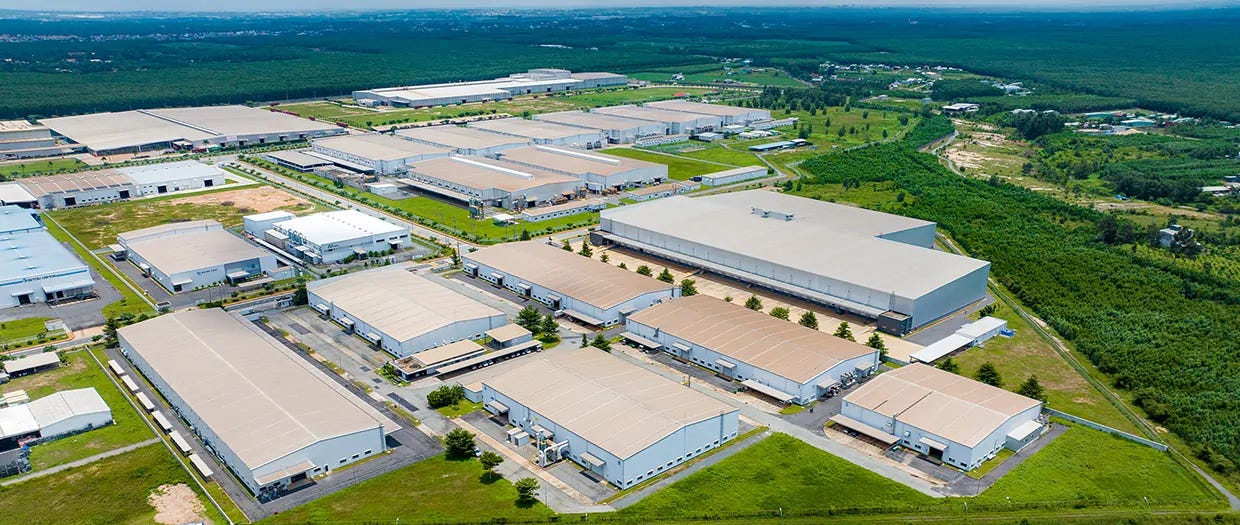
The client already had access to an office outside the industrial park.
That location could be used for both new trading projects, meaning the projects could also fall under the licensing authority responsible for that location rather than the industrial park authority.
This was an important part of the structure.
The project location wasn’t just an address. It affected the licensing strategy.
The Result
The client proceeded with the separate investment project structure.
The existing companies were retained.
The manufacturing projects remained unchanged.
A suitable office outside the industrial park was selected for the new trading projects.
Separate IRC applications were then prepared for each company, including the required investment capital and project information.
The approach gave the client a practical middle ground:
No unnecessary new companies.
No need to compromise the existing manufacturing projects.
A clearer licensing pathway for the new trading activities.
What This Case Tells Us
01. Legal permission and practical approval are not always the same.
A business activity may appear legally permissible but still face practical licensing uncertainty depending on the project, location and current authority practice.
02. Old approvals are not always reliable precedent.
What another company obtained several years ago may not reflect how applications are assessed today.
03. Project location can change the licensing strategy.
Where a new investment project is located can determine which authority reviews the application.
04. A new company is not always the only alternative.
In some situations, separate investment projects can operate under the same legal entity.
05. The best structure balances more than legal certainty.
For an expanding foreign-invested business, the right solution should consider approval probability, cost, speed, operational practicality and long-term compliance.
The Bottom Line
The client didn’t need to choose between amending the existing manufacturing project and setting up a new company.
A third option existed:
Keep the existing companies. Keep the manufacturing projects. Add separate trading investment projects in the right location.
For foreign-invested businesses expanding in Vietnam, sometimes the most practical structure is not the most obvious one.
Planning to Expand Your Business in Vietnam?
If your existing foreign-invested company is considering adding trading, distribution, import or other new business activities, the right structure may depend on your current project, location, products and licensing authority.
Before changing your existing registration or setting up a new entity, get the structure assessed first.
👉 Book a consultation with Vietnam Operations: VO
VO’s Case Study shares practical lessons from real-world Vietnam market-entry and operational situations.