

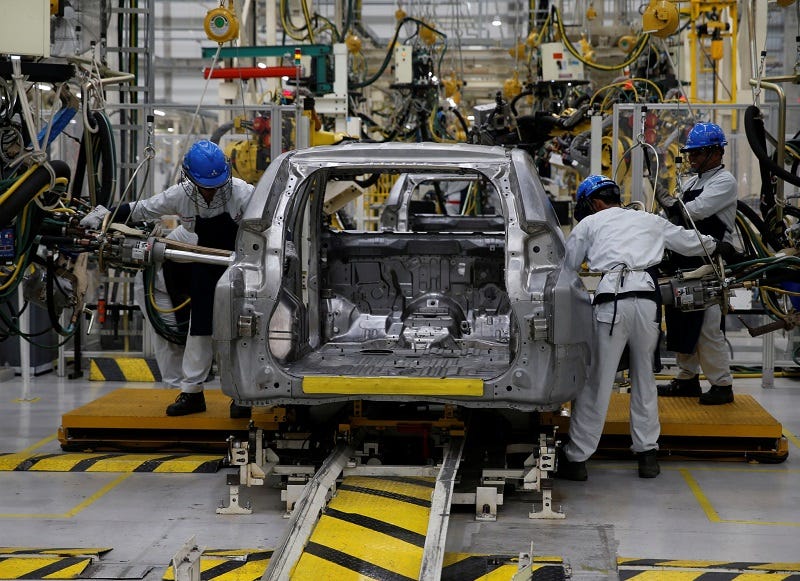
In recent years, Vietnam has become one of the most attractive manufacturing destinations in Asia. Global companies like Samsung, Foxconn, Lego, and Nike have continued expanding their factories in the country, making Vietnam an important part of the global supply chain.
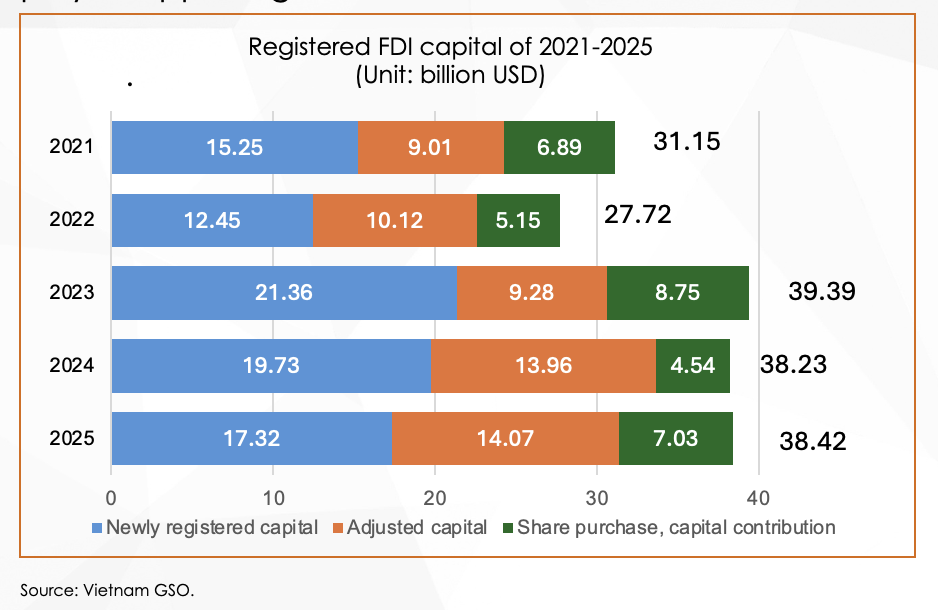
According to the General Statistics Office (Ministry of Finance), total registered FDI as of 31 December 2025 reached USD 38.42 billion, up 0.5% year-on-year. Notably, capital contributions and share acquisitions surged by 54.8%, amounting to USD 7.03 billion across 3,587 transactions, highlighting the growing role of M&A activities and strategic restructuring in Vietnam.
Lower Costs, Strong Manufacturing Potential
One of Vietnam’s biggest advantages is its competitive production costs. Compared to China, labor and operating costs in Vietnam are still significantly lower.
At the same time, Vietnam has a young workforce of more than 52 million people. Workers are known for being adaptable, hardworking, and increasingly skilled, especially in electronics and manufacturing industries.
This combination allows companies to reduce costs while maintaining production quality.
A Strategic Location in Asia
Vietnam is located in the center of Southeast Asia and close to China, the world’s largest manufacturing base. This makes it easier for companies to connect supply chains and transport goods to global markets.
As more businesses follow the “China + 1” strategy to reduce dependence on China alone, Vietnam has become one of the top alternative destinations.
Vietnam Compared With Other Countries in the Region
Compared to China, Vietnam offers lower labor costs while still being close to major Asian supply chains.
Compared to Thailand and Malaysia, Vietnam has a younger workforce and more competitive operating expenses.
Indonesia has a large domestic market, but logistics can be more difficult because of its geography as an island nation.
Another major advantage is trade. Vietnam has signed more than 15 free trade agreements, including EVFTA, CPTPP, and RCEP. This gives products made in Vietnam better access to markets in Europe, Asia, and other regions with lower tariffs.
Vietnam Is Moving Beyond “Cheap Manufacturing”
Vietnam is no longer seen only as a low-cost manufacturing country.
In recent years, the country has attracted more investment in electronics, semiconductors, and high-tech industries. Samsung now produces a large share of its smartphones in Vietnam, while other technology companies are increasing investments in AI, chips, and electronic equipment.
This shows that Vietnam is slowly transforming from a “cheap factory destination” into a higher-value manufacturing and technology hub.
Conclusion
With competitive costs, a strategic location, a young workforce, and strong trade connections, Vietnam is becoming one of Asia’s most important manufacturing centers.
As global supply chains continue to shift, Vietnam is no longer just a backup option it is becoming a long-term manufacturing destination for international companies.