

The New Dating Advice Is in Your Feed
Imagine being 22 and unsure whether someone likes you. A generation ago, you might have asked a friend. Today, you might open TikTok. You will probably find an answer within seconds.
Don’t text first.
Wait three hours before replying.
If they really like you, they will pay.
If they don’t post you, they are hiding you.
If they do not make enough effort, leave.
If they make you uncomfortable, they are a red flag.
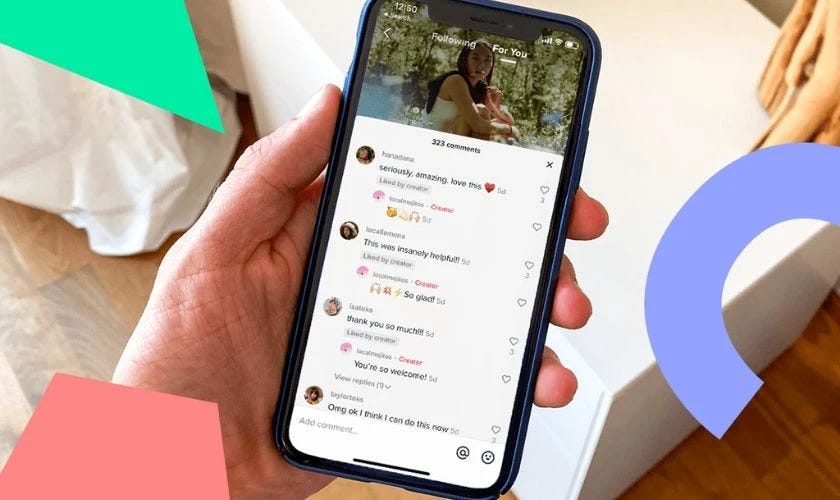
Some of these ideas can be useful. Learning about boundaries, consent, emotional abuse or unhealthy relationships can help young people recognise situations they might otherwise struggle to identify.
But something changes when complex human relationships are reduced to short videos, viral phrases and universal rules.
The question becomes less “What is happening between us?” and more “What does TikTok say this behaviour means?”
That shift matters.
A recent Kenh14 article describes young couples whose communication increasingly resembles a strategic game: deliberately delaying replies, refusing to text first, using silence as a tactic, or interpreting small disagreements through labels such as “ghosting,” “breadcrumbing” and “red flags.” The article argues that social-media dating advice can turn intimacy into a contest over who appears less emotionally invested. The important point is not whether every dating trend is harmful.
It is that the internet has become one of the places where a generation learns the rules of intimacy.
From Relationship Advice to Relationship Templates
Social media is very good at turning complicated subjects into simple formulas. That is part of its appeal. Relationships are complicated. Algorithms prefer content that is easy to understand, emotionally strong and immediately recognisable.
So:
“We communicate differently because we have different attachment styles”
becomes:
“If he does X, he’s a red flag.”
A discussion about financial expectations becomes:
“A man who loves you will pay for everything.”
A conversation about boundaries becomes:
“Never tolerate this behaviour.”
A breakup becomes:
“If they wanted to, they would.”
The problem is not that every statement is false.
The problem is that context disappears.
A relationship between two people with different incomes, family backgrounds, personalities and expectations cannot always be evaluated using a 30-second template designed to generate engagement.
Yet the template is often easier to consume than the conversation.
When Love Becomes a Performance
Kenh14’s reporting highlights another development: social media can turn material gestures into visible evidence of love.
Luxury dinners, designer bags, expensive phones, overseas trips and financial support become content.
The more visible the gesture, the easier it becomes to compare. This can create an unusual feedback loop. A person sees other people’s relationships online. The relationship appears happy because the visible moments are attractive. Those moments become a benchmark. The benchmark becomes an expectation. And the expectation is eventually brought into a real relationship.
In the example described by Kenh14, material support becomes a way of measuring whether a partner genuinely cares, while the other partner becomes increasingly suspicious that financial expectations represent exploitation.
Both sides can end up responding not to the person in front of them, but to an imagined category of people they have encountered online.
The boyfriend is no longer simply a boyfriend.
He becomes a potential “provider” or a potential “gold digger’s victim.”
The girlfriend is no longer simply a girlfriend.
She becomes a potential “high-value woman” or a potential “gold digger.”
Once that happens, intimacy starts looking surprisingly similar to a negotiation.
The Algorithm Doesn’t Know Your Relationship
This is where the business logic of social media becomes important.
Platforms are designed to recommend content based on what users watch, engage with and respond to.
That means the more relationship content someone consumes, the more relationship content they may encounter.
And not necessarily the most nuanced relationship content.
Content that produces a strong emotional response is naturally suited to the attention economy:
“5 signs he’s secretly losing interest.”
“3 things women should never tolerate.”
“Never chase a man.”
“How to make her obsessed with you.”
“Signs your partner is manipulating you.”
These are simple propositions about complicated situations.
And simple propositions are highly shareable.
The result can be a kind of relationship feedback loop:
Experience → search for explanation → algorithmic recommendation → stronger belief → reinterpretation of experience → more content consumption.
Eventually, the feed does not simply reflect how someone thinks about relationships.
It can become part of the framework through which they interpret them.
The Problem Gets More Serious When the Stakes Rise
There is another side to this conversation that goes far beyond dating trends.
In September 2026, a particularly serious case in Dong Nai drew attention after three members of a family were killed. VietnamPlus reported that initial investigation information linked the suspect to a relationship conflict and described intense resentment and emotional fixation surrounding the case.

Tiền Phong subsequently reported on the broader risk around controlling and possessive behaviour in relationships, particularly after separation. Experts quoted by the newspaper pointed to factors including excessive emotional dependence, possessiveness, controlling behaviour and accumulated psychological difficulties. They also stressed that repeated threats following a breakup should not simply be dismissed as something someone says “because they love too much.”
These cases should not be reduced to a simple story about TikTok or social media.
There is no basis for saying that an algorithm causes violent behaviour.
But they highlight something important about the environment in which relationships now exist.
Young people are navigating love while simultaneously being exposed to an enormous volume of relationship content including content that can normalise jealousy, surveillance, manipulation, revenge or extreme possessiveness.
The issue, therefore, is not simply what young people watch.
It is whether they have enough real-world emotional education to distinguish between what is entertaining online and what is healthy in real life.
Social Media Can Teach the Wrong Lesson About Consent
This problem is not new.
A VietNamNet report examined TikTok trends involving romantic or sexual behaviour and cited experts who warned that some viral challenges could normalise behaviour that ignores consent.
One example involved the “Kiss Your Best Friend Challenge,” in which someone unexpectedly kisses a friend. The experts quoted in the article stressed that treating such behaviour as a joke can blur the importance of consent and personal boundaries.
That distinction matters because young people don’t learn only through formal education.
They learn through repetition.
They watch how influencers behave.
They watch how couples communicate.
They watch how conflict is portrayed.
They watch what gets rewarded with millions of views.
And they gradually build their own understanding of what is “normal.”
As VietNamNet’s reporting notes, family and school environments remain important because young people need frameworks that help them interpret what they encounter online rather than simply absorb it.
This may be one of the most important questions for the next generation:
Who teaches young people how to interpret the internet?
Vietnam’s Relationship Economy Is Changing
There is also an economic dimension.
Dating apps have already changed how young Vietnamese meet potential partners.
Research and reporting over the past several years show that Vietnamese young adults increasingly use online platforms and dating apps to meet people they might not otherwise encounter. VnExpress reported in 2019 that Tinder and other dating apps were becoming increasingly common among young Vietnamese, while Vietnam News similarly documented young people using online platforms to find relationships.
But the market has now moved beyond simply finding someone.
There is an entire economy around learning how to date.
Dating advice.
Relationship creators.
Couples content.
Dating coaches.
Psychology content.
Breakup content.
Self-improvement content.
Beauty and fashion content.
Restaurants and travel experiences designed for couples.
Gifts and “relationship milestones.”
Even therapy and emotional-wellness services increasingly sit within this broader ecosystem.
In other words, the emotional economy is expanding.
People are not only consuming products to improve how they look or feel.
They are consuming information and experiences designed to help them navigate intimacy.
And There Is a Counter-Trend
Interestingly, Vietnam is also seeing signs of people looking for something that algorithms cannot fully provide: real-world interaction.
In 2026, Tuổi Trẻ reported on offline dating events in Vietnam where participants meet in person rather than relying entirely on apps. Some participants also described using AI to prepare for conversations before attending these events.
That creates an interesting paradox.
Technology is helping people find relationships.
Technology is helping people prepare for relationships.
But some people are also turning back toward physical spaces to actually experience them.
Perhaps this is not a rejection of technology.
It is an acknowledgement of its limits.
An algorithm can recommend someone.
It cannot experience chemistry for you.
An AI can suggest what to say.
It cannot take responsibility for what happens after you say it.
A TikTok creator can tell you when to leave.
But they do not have to live with the consequences of your decision.
What This Means for Vietnam’s Young Workforce
At first glance, this may seem like a lifestyle story.
It is not entirely one.
For businesses operating in Vietnam, understanding how younger consumers and employees build relationships with technology is increasingly relevant.
The same generation learning about love through short-form video is also entering workplaces shaped by:
algorithmic recommendations;
influencer culture;
online communities;
AI assistants;
personal branding;
constant social comparison;
and increasingly blurred boundaries between private and public life.
The underlying behavioural shift is bigger than dating.
Young people are increasingly learning social norms from platforms.
They learn how to dress.
How to work.
How to communicate.
How to spend.
How to travel.
How to build a career.
And increasingly, how to love.
That matters because companies are not hiring abstract “Gen Z consumers.”
They are hiring people whose expectations about communication, boundaries, identity, money and relationships have been shaped in a radically different information environment from previous generations.
The Real Question Isn’t Whether Social Media Is Good or Bad
Social media can help young people discover communities, learn about consent, recognise unhealthy behaviour and find people they would never otherwise meet.
It can also amplify stereotypes, simplify complex psychological ideas and turn individual relationships into competitions governed by viral rules.
Both things can be true.
The challenge is therefore not to tell young people to stop using social media.
It is to give them enough real-world experience and critical thinking to understand that a viral relationship rule is not the same thing as a universal truth.
A relationship is not a TikTok.
There is no comment section.
No algorithm knows both sides.
No creator sees the entire story.
And no 30-second video has to live with the consequences.
Vietnam Is Raising a Digitally Native Generation
Vietnam’s digital transformation is often discussed through smartphones, e-commerce, fintech, AI and productivity.
But there is another transformation happening quietly.
The internet is becoming part of how young Vietnamese people construct their understanding of everyday life.
Including love.
That makes this more than a conversation about dating.
It is a conversation about how culture is transmitted in an algorithmic age.
For previous generations, relationship norms were largely learned from family, friends, school, television, books and personal experience.
For today’s young people, the classroom is much larger.
It includes TikTok.
Instagram.
Threads.
YouTube.
Dating apps.
AI.
And millions of strangers telling them what love is supposed to look like.
The question for Vietnam is not whether this will shape the next generation.
It already is.
The more important question is:
When young people close the app and enter the real world, will they know the difference between what the algorithm taught them and what they have actually learned for themselves?
Want to understand Vietnam beyond the headlines?
Talk to Vietnam Operations for practical, on-the-ground insights into Vietnam’s market, consumers and changing business environment.
Get in touch with us to start the conversation.